I tested ChatGPT-4o vs Gemini Advanced with 5 AI image prompts — and the results surprised me
Definable AI · February 13, 2026 · 8 min read
I compared ChatGPT-4o and Gemini Advanced across five image prompts. The results reveal trade-offs in realism, speed, and creative style.
Key Takeaways
- ChatGPT-4o delivered more consistent creativity, stylized compositions, and visual polish across diverse prompts.
- Gemini Advanced produced superior hyperreal portraits and product-style shots, with excellent texture and lighting.
- Gemini was noticeably faster at generating images, giving it an edge when speed matters.
- Choose ChatGPT for versatility and artistic interpretation; choose Gemini for photorealism and commercial-ready renders.
Both ChatGPT and Gemini are considered among the best AI image generators out there. With both of these models, you can describe a scene and watch it come to life in seconds. But not all image generators are created equal.
To see how they compare, I gave both platforms the exact same five prompts — ranging from fantasy to photorealism — and evaluated how each AI responded in terms of creativity, detail and how well they interpreted the brief.
The results weren’t always what I expected. In some cases, one tool clearly outshone the other. In others, it came down to style versus realism.
To make it easy to follow along, the layout is consistent throughout this piece. ChatGPT’s image output will always appear on the left, and Gemini’s on the right.
That way, you can easily compare the two side by side and see exactly how each AI interpreted the brief.
This applies to all prompts except number two, in which the image of Gemini's output is beneath ChatGPT's.
1. A photorealistic bowl of ramen on a wooden table
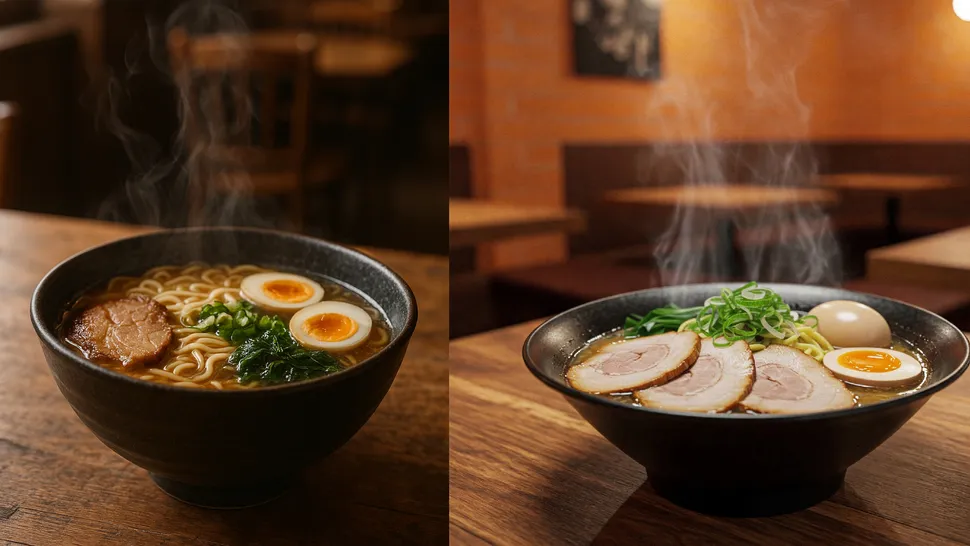
For this prompt, I wanted to test hyperrealism. Food photography is notoriously hard to fake — so a steaming bowl of ramen with detailed toppings, warm lighting, and visible textures would be a strong indicator of how well each AI renders reality.
If either image could pass for a real restaurant photo at a glance, I’d call that a win. I used the following prompt: "Create an image of a photorealistic bowl of ramen with steam rising, placed on a rustic wooden table in a softly lit restaurant."
Both models did well here — but ChatGPT took the win. The image looked genuinely photorealistic, right down to the fine details like rising steam and glossy broth. If I saw it in my feed, I probably wouldn’t question it.
Gemini’s version, on the other hand, didn’t quite land the same way. The egg looked flat and lacked dimension, and the overall composition felt less convincing. It wasn’t bad, but it didn’t pass the “is this real?” test quite like ChatGPT’s did.
2. A futuristic pair of running shoes on a white studio backdrop
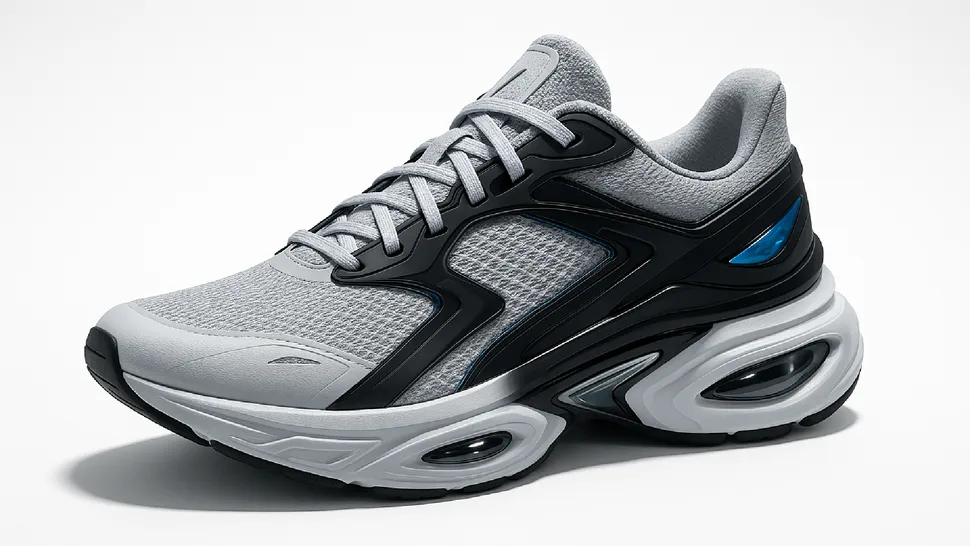
Here, I was looking for a clean product rendering. Think e-commerce-ready: sharp edges, studio lighting, and realistic material textures.
It’s a test of how well each AI can produce commercial-style visuals with minimal background noise. The prompt might seem simple, but that’s exactly why it matters — accuracy and presentation are everything.
For this one I used: "Create an image of a futuristic pair of running shoes, photographed on a white studio backdrop, with soft shadows and reflective details."
I couldn't fit both images on the same slide, so the Gemini one is below

Both AIs did a decent job interpreting the prompt — but Gemini came out ahead on this one.
The shadowing and texture work were excellent, giving the shoes real dimension and weight. There was even a soft glow effect that added to the futuristic vibe.
Interestingly, both AI models produced designs that closely resembled existing Nike trainers, but ChatGPT’s version looked flatter by comparison, almost like a 2D rendering rather than a polished product photo.
3. A medieval castle floating in the sky at sunset
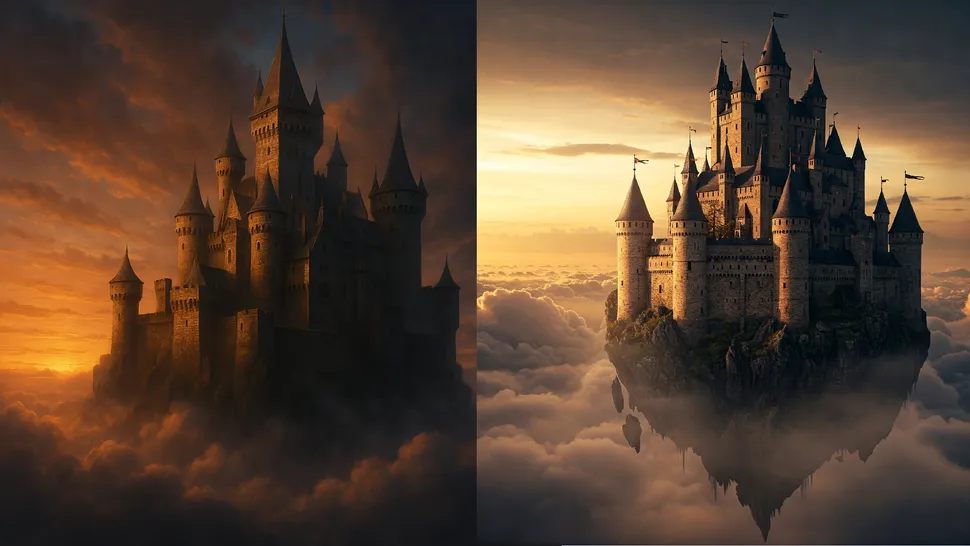
This prompt leans into fantasy world-building — the kind of thing you'd expect on a book cover or in a game concept art deck.
It tests composition, lighting, and atmosphere, plus how imaginative each AI can get with structure and setting. It’s not just about following instructions, but creating something with mood.
For the fantasy world-building prompt, I went with: "Create an image of a grand medieval castle made of stone, floating above the clouds at sunset, with dramatic lighting and atmospheric depth."
ChatGPT absolutely nailed this one. The lighting was dramatic, with half of the castle cast in shadow and the rest glowing in golden light — exactly the kind of atmospheric depth I had in mind.
Gemini, meanwhile, went a bit too literal. The castle was indeed floating, but the bottom section looked confused — like it wasn’t sure whether to reflect in the clouds or be rooted in something.
It gave slight "Laputa: Castle in the Sky" vibes, which was a nice touch, but it didn’t quite stick the landing.
4. A vintage-style travel poster for Mars

This one’s all about graphic design and stylistic aesthetics. I wanted to see if each AI could capture the look and feel of mid-century travel posters — the bold typography, flat graphic shapes, limited color palettes, and intentional design choices.
It’s less about realism and more about artistic control and visual language. I tested both models with the following prompt: "Create a retro 1950s-style travel poster for Mars, with bold lettering, stylised red planet landscape, and a vintage color palette."
This one was a close call, but ChatGPT just edged it. Its version had a grainy, textured finish that really sold the vintage look, along with varied typography that gave it an authentic, era-appropriate feel. You could genuinely imagine it hanging in a retro sci-fi exhibition.
Gemini’s version wasn’t far behind — it used a fitting colour palette and bold lettering — but it lacked that authentic design character. It felt more like a poster inspired by the era, rather than something made in it.
5. An editorial portrait
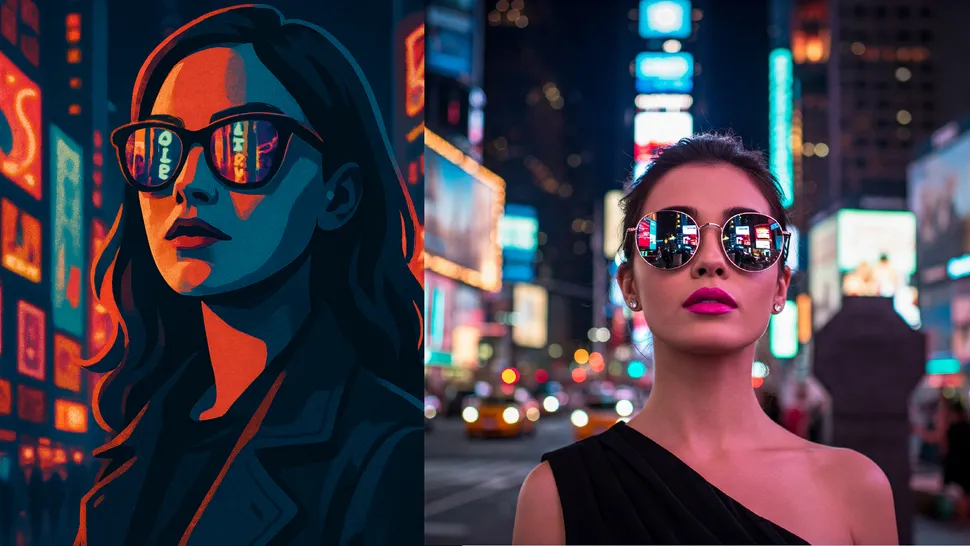
To round things out, I wanted something stylised but rooted in realism — the kind of portrait you'd see in an editorial spread.
This prompt tests each AI’s ability to render human features accurately, while also managing layered visual elements like reflections, lighting, and movement in a busy urban setting.
For the last prompt I used: "Create a stylised portrait of a woman in Times Square at night, wearing reflective sunglasses that show neon signs, mid-shot, cinematic lighting."
There’s absolutely no doubt that Gemini smashed this one. The portrait was high-resolution, perfectly lit and packed with detail. From the skin texture to the subtle overlining of the lips, every element was spot on.
I scrutinized the image, looking for something — anything — off, and came up empty. The realism was exceptional, easily on par with what you’d expect from Midjourney.
ChatGPT took “stylized” in a more artistic direction — not bad by any means, but in terms of photographic quality and precision, Gemini’s output was in a different league.
Final thoughts....
Across all five prompts, ChatGPT takes the crown. Its image outputs were consistently creative, well-composed, and closely aligned with the intent of each brief — particularly when it came to fantasy, texture, and stylised visuals.
It handled artistic prompts with confidence and delivered visuals that felt thoughtfully composed, not just generated.
That said, Gemini absolutely held its own — and in some areas, outperformed ChatGPT. Its hyper-realistic portrait was flawless, and it nailed the product-style shot with better texture and depth.
It also has one major edge: Gemini generated images noticeably faster than ChatGPT throughout the test. If speed and realism are your priorities, Gemini is well worth using.
But for overall versatility, creative interpretation, and visual polish — ChatGPT was the stronger image generator this time around.
Frequently Asked Questions
Which is better for photorealistic images: ChatGPT-4o or Gemini Advanced?
In this test ChatGPT-4o edged out Gemini for some photorealistic scenes (like the ramen), but Gemini produced superior photoreal portraits and product shots in other prompts.
Which model is faster at generating images?
Gemini Advanced generated images noticeably faster than ChatGPT-4o during these tests, making it a strong choice when speed matters.
Can these AI-generated images be used commercially?
Usage rights depend on the platform's terms of service and licensing; check each provider's commercial-use policy before using images for business purposes.
How do I write prompts for better image results?
Be specific about style, lighting, composition, and reference points (e.g., 'photorealistic, soft studio lighting, white backdrop') to guide the model toward your intended result.
Which is more versatile for creative and stylized art?
ChatGPT-4o proved more versatile for stylized, atmospheric, and design-focused outputs, while Gemini excelled at realism and fine photographic detail.